
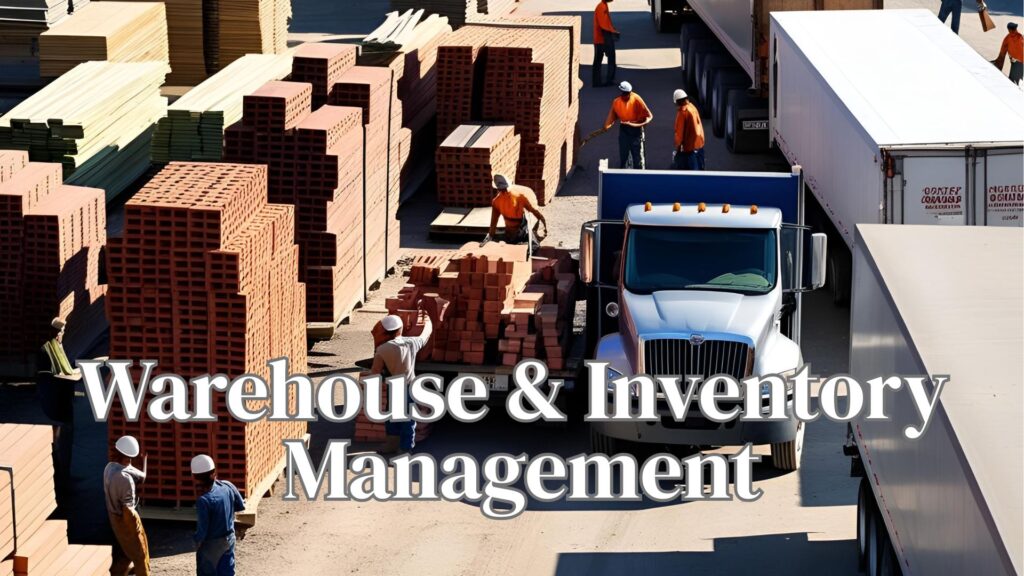
As building materials distributors expand their operations across multiple outdoor yards, traditional inventory management methods are becoming more difficult to scale. Manual counts are time-consuming. Materials get misplaced. And visibility across open-air storage areas is limited.
That’s where drones come in.
Drones offer a fast, efficient, and safe way to track inventory across large outdoor storage areas—but to get the most out of this technology, your yard or warehouse needs to be ready. That means thinking beyond the drone itself and focusing on infrastructure, layout, and integration with your digital systems.
Here are the key warehouse and yard design considerations that make drone-based inventory tracking work in the real world.
Drones rely on visual and GPS-based navigation to fly pre-programmed paths across your yard. If your storage layout is cluttered, inconsistent, or has uneven terrain, drones can’t scan accurately—or safely.
Organize oversized materials (pipes, lumber, steel) in straight, evenly spaced rows
Ensure drone flight paths are free of hanging wires, high poles, or unpredictable vehicle movement
✅ Why it matters: This improves drone efficiency and reduces the risk of scanning errors or physical collisions.
Drones equipped with cameras and RFID readers depend on clearly visible tags or labels. If your materials aren’t labeled consistently, the drone may capture images—but not usable data.
Apply weatherproof barcodes or QR codes to pallets, bins, and bundles
Place labels on top or on the side facing the drone’s path
Use reflective or high-contrast materials to improve tag recognition, especially for low-light early morning or evening scans
✅ Why it matters: Reliable tag scanning means better inventory accuracy and fewer manual corrections.
The more structured your yard layout, the easier it is to map and track via drones. Drones operate on flight plans based on zones—so a random or constantly shifting yard layout limits their usefulness.
Divide your outdoor yard into digitally mapped zones, rows, or aisles
Create “no-fly zones” for areas with overhead obstructions or heavy activity
✅ Why it matters: Zoning simplifies inventory tracking and aligns drone scanning data with your ERP locations.
Even the best drone won’t improve inventory visibility unless the data it collects is fed into your ERP or warehouse management system.
Ensure your ERP is configured to receive and reconcile drone scan data
Assign staff to monitor scans, resolve discrepancies, and follow up on flagged inventory issues
✅ Why it matters: Real-time drone data is only valuable if it feeds directly into your operational workflows.
Drones need to take off, land, and recharge—ideally in a designated, safe location that’s protected from weather and heavy yard traffic.
Set up a dedicated drone zone with a landing pad, charging station, and control terminal
Place the drone station near your main office or control center for easy monitoring
If using Drone-as-a-Service (DaaS), ensure third-party teams have access to secure areas for equipment drop-off and setup
✅ Why it matters: Reliable infrastructure reduces the risk of downtime or damage to your drone fleet.
As your inventory grows, so should your drone strategy. Planning now for scalable yard layouts will ensure your drone system keeps pace with business expansion.
✅ Why it matters: A drone-friendly yard layout keeps your operation agile and ready for growth.
Drone inventory tracking isn’t just about flying robots—it’s about rethinking how you structure and manage your outdoor storage environments. The right warehouse and yard design makes drone usage not just possible, but profitable.
By integrating clear scanning paths, consistent labeling, structured zones, and ERP connectivity, you can transform your outdoor yard into a digitally mapped, easily monitored supply chain hub—ready for anything.
🚁 Considering drones for your outdoor yards? Let’s talk through the infrastructure and ERP integration that will set you up for success.

