
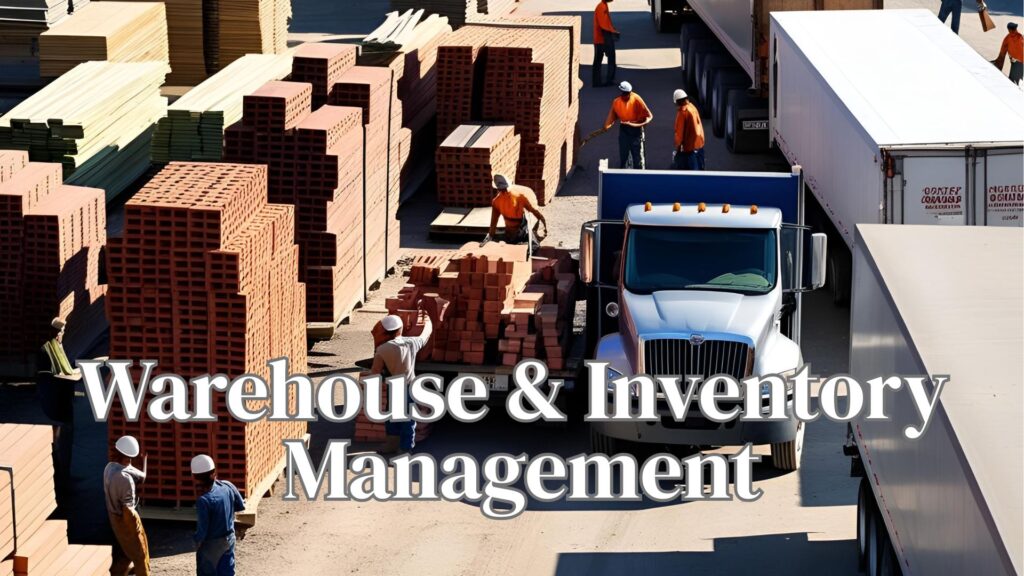
Oversized building materials—like steel beams, timber, insulation rolls, or sheetrock—aren’t just harder to store. They’re harder to move, protect, and organize at scale. As we move into 2025, distributors are rethinking how they manage these bulky SKUs, especially as space becomes more expensive and customer delivery expectations rise.
Here are the leading 2025 trends shaping best practices for storing and organizing oversized materials in warehouses and yards—and how ERP technology plays a central role.
Gone are the days of simply stacking oversized goods “along the fence.” Distributors are investing in digitally mapped yard zones, where each type of material has a designated location based on handling needs, turnover rate, and delivery priority.
This reduces movement time, improves safety, and makes loading oversized materials faster and more accurate.
To maximize space, yards are going vertical—especially for long materials like pipes, timber, and rods. Cantilever racking systems paired with ERP-managed bin tracking allow better use of airspace without sacrificing accessibility.
Oversized materials are often more exposed to the elements, making them vulnerable to damage. In 2025, we’re seeing wider use of environmental monitoring, especially for items sensitive to moisture, warping, or UV exposure.
ERP systems are increasingly being used to plan not just what goes on a truck, but how it’s loaded and unloaded—especially for oversized SKUs.
Staging materials in the order they’ll be offloaded at the job site
This reduces delivery errors, avoids damage, and shortens unloading time on site.
Oversized materials are inherently more dangerous to handle. With tighter compliance expectations in 2025, companies are automating safety checks and storage audits.
This not only protects workers—it protects your business from liability.
Storing and organizing oversized building materials is no longer about just finding space—it’s about planning, protecting, and optimizing every square foot and every SKU. As we move into 2025, the companies that stay ahead will be those that digitally manage space like inventory, using ERP tools that bridge the gap between operations, logistics, and safety.
📐 Want help optimizing your yard layout for bulky inventory? Let’s design a digital-first strategy together.
