
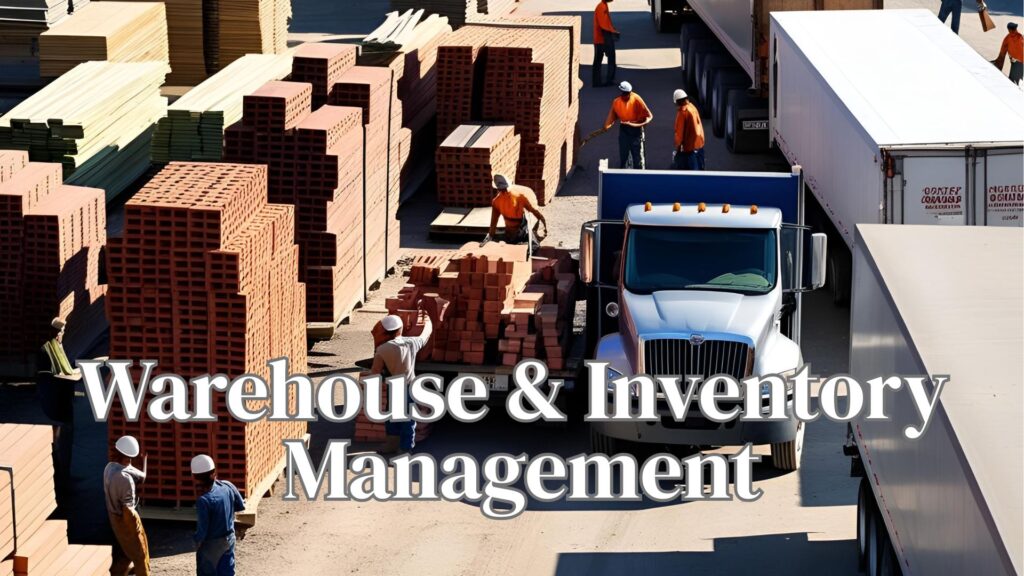
When your business grows, so does your inventory — and for building material distributors, that means more oversized products like steel beams, lumber, drywall, piping, and palletized stone taking up more space than ever. These items don’t just require more room — they demand smarter, safer, and more scalable organization strategies as you expand.
Many distributors start with a functional layout that works when space is limited. But as more SKUs, locations, and daily truckloads are added, poor planning around oversized materials leads to bottlenecks, safety hazards, and inventory chaos.
Here’s how to take the best practices for organizing oversized materials — and scale them up with structure and visibility.
As your warehouse or yard grows, it’s tempting to just add space and start filling it. But scaling well means replicating proven zone-based layouts rather than letting your layout sprawl.
Use zone codes in your ERP system that link to physical locations
Zone-based layouts allow you to maintain consistency, train faster, and apply the same picking logic across locations.
When your team uses different racking systems at each location, it creates:
This also helps procurement standardize new site setups and streamline replacement parts.
Don’t wait until the warehouse is full to label bins or zones. As you scale:
Assign bin and zone codes in your ERP during layout planning
This allows anyone — new hire or veteran — to quickly find oversized items and avoid misplacement or double-handling.
As the volume of oversized materials grows, so does the complexity of moving them. To avoid slowdowns:
Pre-stage by route or jobsite to reduce time in the loading lane
Use ERP-integrated pick tickets that include load order and handling instructions
Scaling staging processes means fewer delays, smoother dispatching, and less strain on staff and equipment.
With more materials and more yards, it’s easy to lose visibility. Use your ERP to monitor:
These insights help you adjust your layout as you grow — rather than outgrowing your layout.
What works for pallets of fasteners won’t work for 24-foot rebar. As your team grows, formalize how oversized materials are managed by:
Assigning handling permissions in your ERP by user role or certification
A warehouse that scales safely also scales profitably.
Oversized products will always be the most complex part of your inventory. As you expand, the key isn’t just adding space — it’s replicating what works, automating what you can, and enforcing standards through your systems.
By using your ERP to link layout, racking, and movement with clear digital records, your operation can grow — without losing control of your biggest and most valuable materials.
