
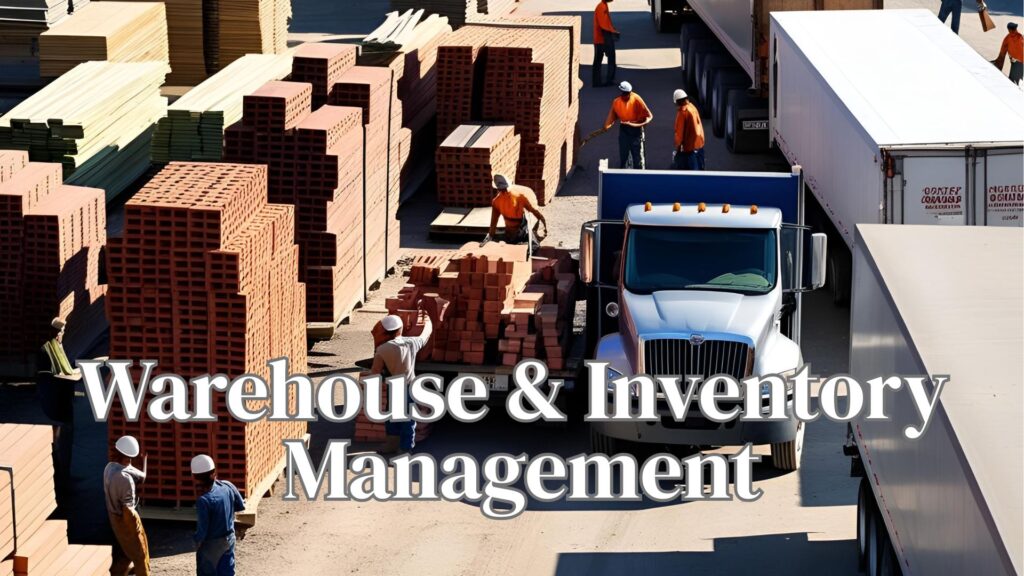
For building materials distributors, storing a consistent set of product dimensions is rare. Your inventory might include everything from long steel pipes and 12-foot lumber to shrink-wrapped fasteners, bagged cement, insulation rolls, and glass panels. Managing them all in the same facility? That’s where layout becomes more than just an operational detail — it becomes a strategic advantage or a hidden cost center.
As SKU counts increase and order volumes grow, warehouse layout for mixed product sizes directly impacts your efficiency, safety, and profitability. Here’s why it matters more than you think — and how to get it right.
Many warehouses are built around generic racking and a few standard aisle widths. But when mixed sizes are involved, that model breaks down fast:
Pallets of fasteners are buried under or behind bulky sheet goods
Special-order items go missing because they don’t have a logical storage home
Every one of these inefficiencies eats into your margins — and frustrates your team.
Instead of organizing strictly by SKU category, group materials based on how they’re moved:
This approach aligns with how materials flow — not just how they’re labeled in your ERP.
You can’t always predict how your product mix will evolve, so make flexibility part of the plan.
Reserve open-ground space for oversized or special-order SKUs that defy traditional rack dimensions
Design your layout to flex with demand — not fight it.
In construction supply, most orders contain a mix of product types. If your layout doesn’t support that, picking becomes a zigzag nightmare.
Map pick routes that start with large/long items and end with small or fragile goods
Use ERP-generated pick tickets with optimized paths based on product size and zone
The right path saves minutes per order — which adds up across hundreds of daily picks.
Materials that are out of sight often go unused, misplaced, or duplicated.
Use open shelving, see-through racking, or color-coded signage for quick identification
Train teams to update locations in real-time when stock is moved or re-racked
Good layout isn’t just physical — it’s digital too.
Even a great storage layout fails if the last 100 feet of the journey aren’t optimized.
Sort staging zones by delivery sequence, truck type, or load weight
This ensures your hard work in storage layout isn’t undone at the finish line.
And importantly, it future-proofs your operation as your SKU mix continues to evolve.
If your warehouse layout was designed for simplicity but now handles complexity, it’s time to rethink the flow. With ERP-linked zoning, flexible racking, and a strategy rooted in material movement (not just product category), you can turn layout into a competitive edge — not just an afterthought.
When you optimize your layout for what you actually store and ship — not what you used to — your operation becomes faster, safer, and smarter.
